
Dal Dhokli is a one-pot meal popular in the Western Indian states of Rajasthan, Gujarat, and Maharashtra. There are two components to it – a soupy dal and the pasta-like dhokli, known as chakolya or varanphal in Maharashtra. The type of dal and how it is cooked varies with the place and personal preference. You can pick any lentil recipe of your choice but make sure you keep it watered down. That’s where i went wrong the first time I attempted it and made a gluggy thing I never wanted to revisit. Wanting to use my Marcato Atlas150 for an Indian dish I decided to give this Sunday-favourite another try. This time around I picked our everyday Maharashtrian Amti for the dal and I now have a winner on hands. Sweet, tart amti makes an excellent soup for these chakolya.
The dhokli can be plain, without the greens, though when in season methi greens are a must-add. Dhokli may be shaped into simple squares or diamonds but can get pretty fancy like the currently-trending star-fish pasta shape known in India as Dal ki Dulhan. You should be able to find all the ingredients for this Sunday-favourite at any local Indian store.
Ingredients for Dhokli
1 cup whole wheat flour (plus additional for dusting)
1 packed cup fresh methi (fenugreek greens), picked, rinsed, and chopped fine*
¼ tsp turmeric powder
½ tsp red chili (cayenne) powder
½ tsp coriander seed powder
1 tbsp besan (chickpea flour)
¼ tsp salt
½ tsp sugar
1 tbsp peanut oil
½ tsp ajwain (carrom seed)
green chillies and ginger crushed in a mortar and pestle, 2 tsp or to taste
a splash of water
* If using dried methi, adjust water accordingly
Ingredients for Dal
¼ cup toor dal (split pigeon peas), rinsed and soaked for an hour
1 ½ cup water
a pinch of hing (asafoetida)
½ tsp turmeric
1 tbsp peanut oil
½” piece of cassia bark (or cinnamon)
3 cloves
¼ tsp black mustard seed
¼ tsp cumin seed
green chillies and ginger crushed in a mortar and pestle, 1 tsp or to taste
½ tsp red chili (cayenne) powder
½ tsp coriander seed powder
½ tsp goda masala (omit, if you cannot find it, but it gives this dal its distinctive taste)
my family recipe – https://madteaparty.wordpress.com/2007/06/15/goda-masala/
½ tsp ground roasted cumin
1 tsp jaggery (or unrefined sugar)
2 pieces of kokum (or any tart fruit or tamarind paste)
salt
Tempering ingredients
1 rounded tsp ghee
½ tsp black mustard seed
½ tsp cumin seed
2 or 3 whole, dry red chilies, broken into half
a few curry leaves
2 tbsp peanuts, untoasted
Garnish
Fresh coriander leaves, chopped
Lime wedges
Measure out all the ingredients for dhokli in a wide basin or mixing bowl. Using very little water knead it into a medium stiff dough. Be careful while adding water – methi leaves bring considerable moisture to the dough and we do not want a soft dough. Knead for 5 minutes. Cover and let the dough rest for 30 minutes.
Meanwhile, prepare the dal. In a pressure cooker combine the soaked toor dal with water, hing, and turmeric and cook till soft and mushy, about 10-15 minutes. Wait for the pressure to subside before opening the lid of the pressure cooker. Alternatively, cook the dal in a pan. Mash the dal with a wooden masher.


Heat 1 tbsp oil in a heavy pan and add the cassia bark and cloves. Add the rest of the spices in the order listed waiting between each addition till the spices start to splutter and become fragrant. Add crushed green chilies and ginger and stir. Add the red chili powder and coriander seed powder and stir for a few seconds. Add the mashed dal to the pan before adding goda masala and roasted cumin powder. Add kokum for a fruity tartness. Stir and check consistency. Add water as needed to get a thin soupy dal. Season with salt and jaggery (or unrefined sugar) and let it simmer for 10 minutes.
Divide the rested dough into 3 or 4 pieces. Dust the work bench with a little flour and roll out the dough ball as thin as a roti – no. 3 setting on the Atlas 150. Cut into desired shapes. Repeat with the remaining dough.

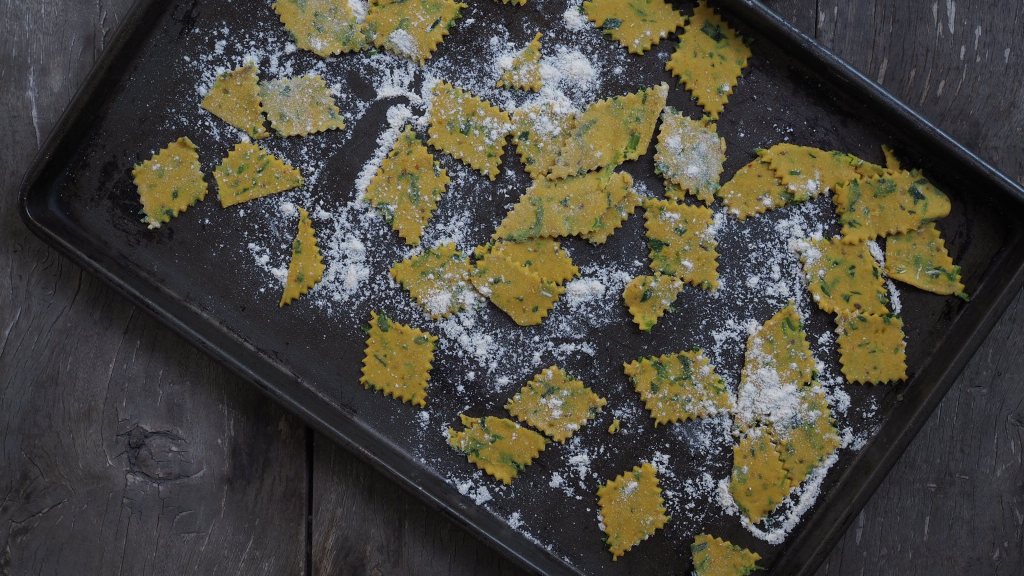
Carefully drop dhokli into the simmering dal. Give a stir to ensure none are stuck to the bottom. They will begin to float in a minute or two. Let them boil gently for 5-7 minutes.
As the dhokli cook, prepare the tempering. Melt ghee in a heavy pan. To the hot ghee add the ingredients in the order they are listed making sure to stir for a few seconds between each addition. Finally, add the peanuts. Stir peanuts in the hot ghee till they darken and smell toasty – a minute and a half. Take off the heat immediately. They will continue to cook a bit in the hot ghee.
Ladle the dal-dhokli into serving bowls. Spoon over the spiced ghee with the peanuts. Garnish with fresh coriander leaves and serve with a squeeze of fresh lime.




 A Mad Tea Party